
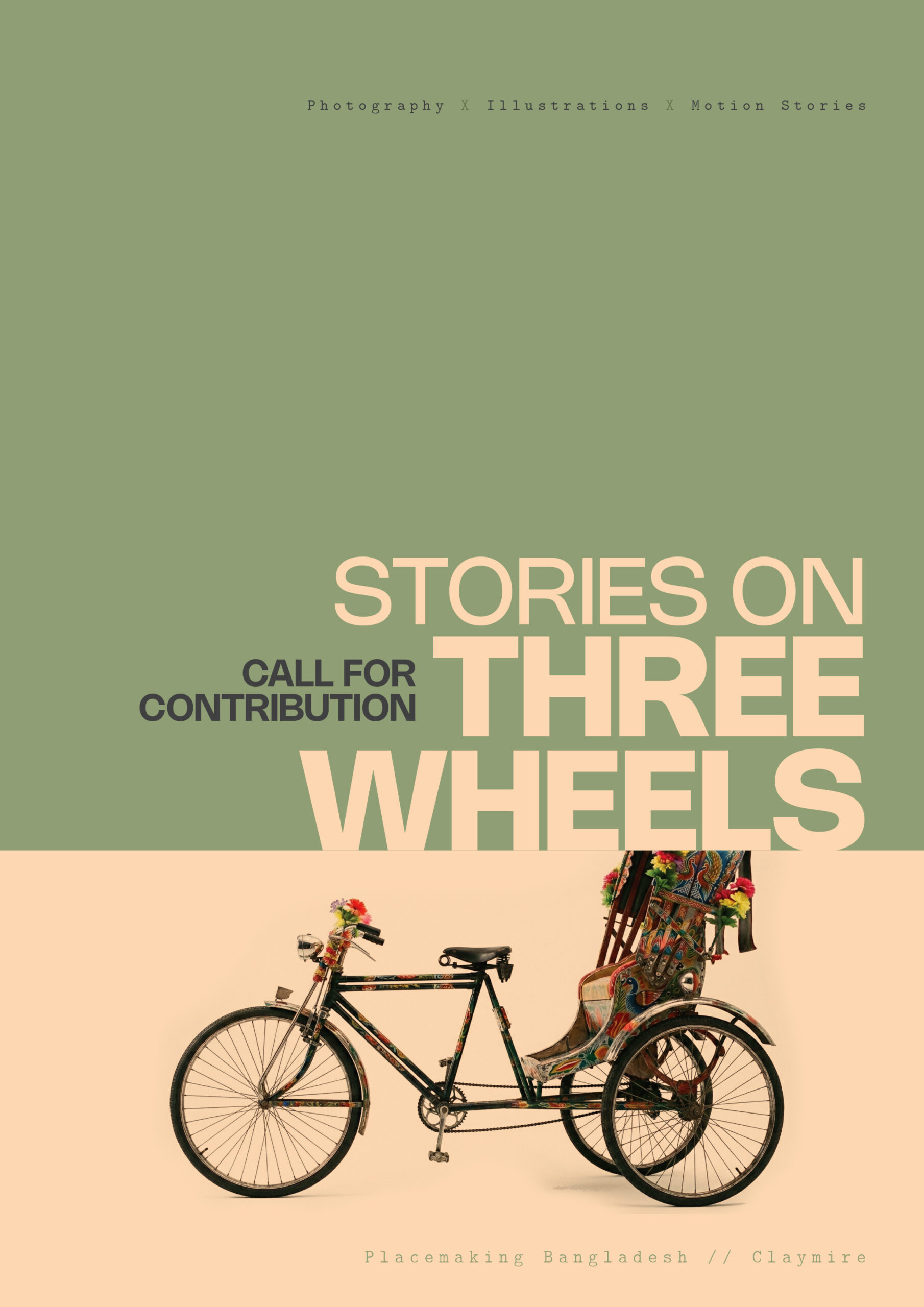

At the heart of this call for contribution is an interest in the rickshaw as a quietly powerful agent within urban life, one that operates across scales, from the intimacy of a single ride to the broader systems that hold cities together. The rickshaw occupies a space between design and improvisation. It is rarely planned for, yet deeply relied upon. It navigates streets shaped by congestion, uncertainty, and constant negotiation, using human judgment, embodied knowledge, and everyday adaptation beyond formal rules or digital systems. In doing so, it produces a form of placemaking that is not fixed or monumental, but mobile, temporary, and repeatedly enacted through daily use. Each journey redraws the city in small ways, connecting fragments of urban life and revealing how space is continuously made through movement. Within this process, the rickshaw becomes a lens through which informal urban systems can be understood. It exposes the gaps between official infrastructure and lived reality, showing how cities function through parallel networks of labor, trust, and experience. The rickshaw’s presence speaks to resilience born from constant adjustment.
Taken together, these dimensions position the rickshaw as more than transport. It becomes space, system, image, and memory at once. Photography, illustration, and short video offer ways to engage with these layers, allowing contributors to observe, interpret, and render visible the often overlooked relationships between movement, informality, creativity, and everyday life. This challenge is grounded in the belief that
understanding cities requires attention not only to buildings and plans, but also to the ordinary practices and objects that quietly sustain them.
This is a collaborative, multi-format challenge structured around three parallel categories. Each category offers a different way of engaging with rickshaw culture and invites contributors to work within the medium that best suits their way of seeing.
Reviews
There are no reviews yet.